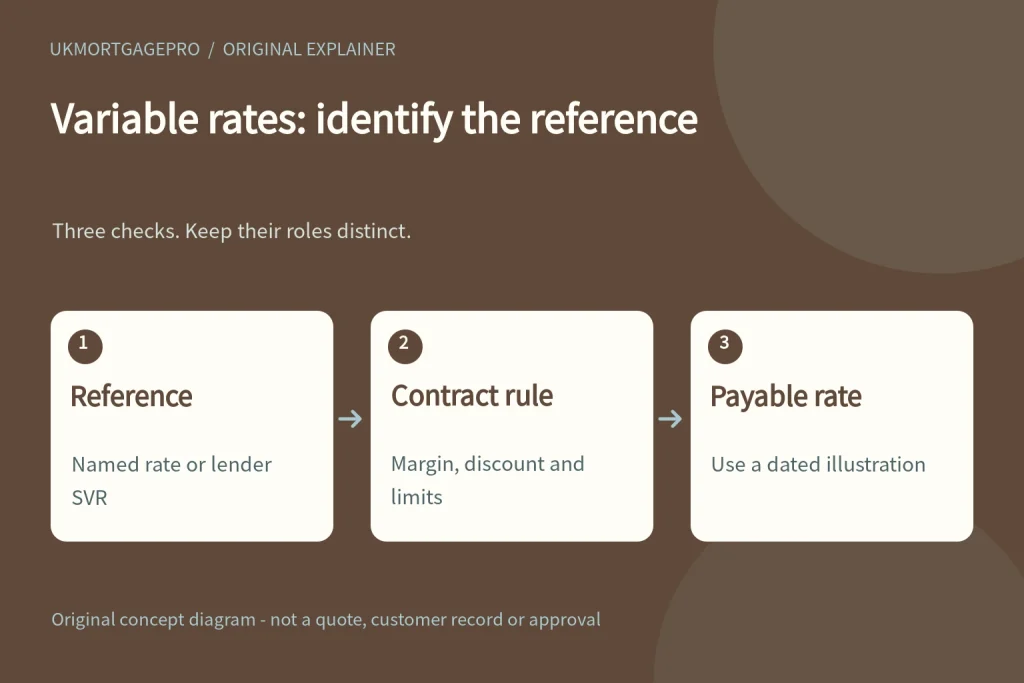
UKMortgagePro original relationship diagram: Reference / Contract rule / Payable rate. The three checks do not replace one another.
The direct answer: ask what the rate is measured against
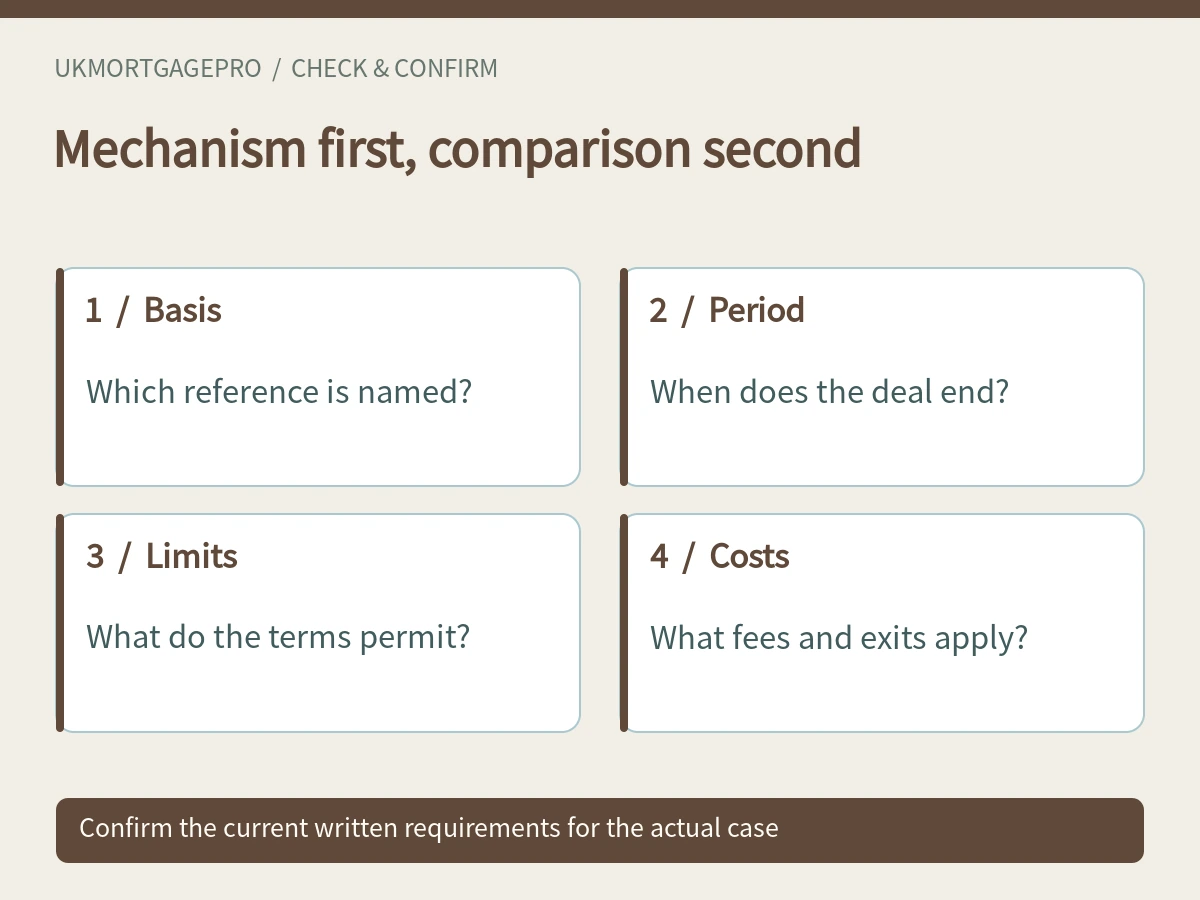
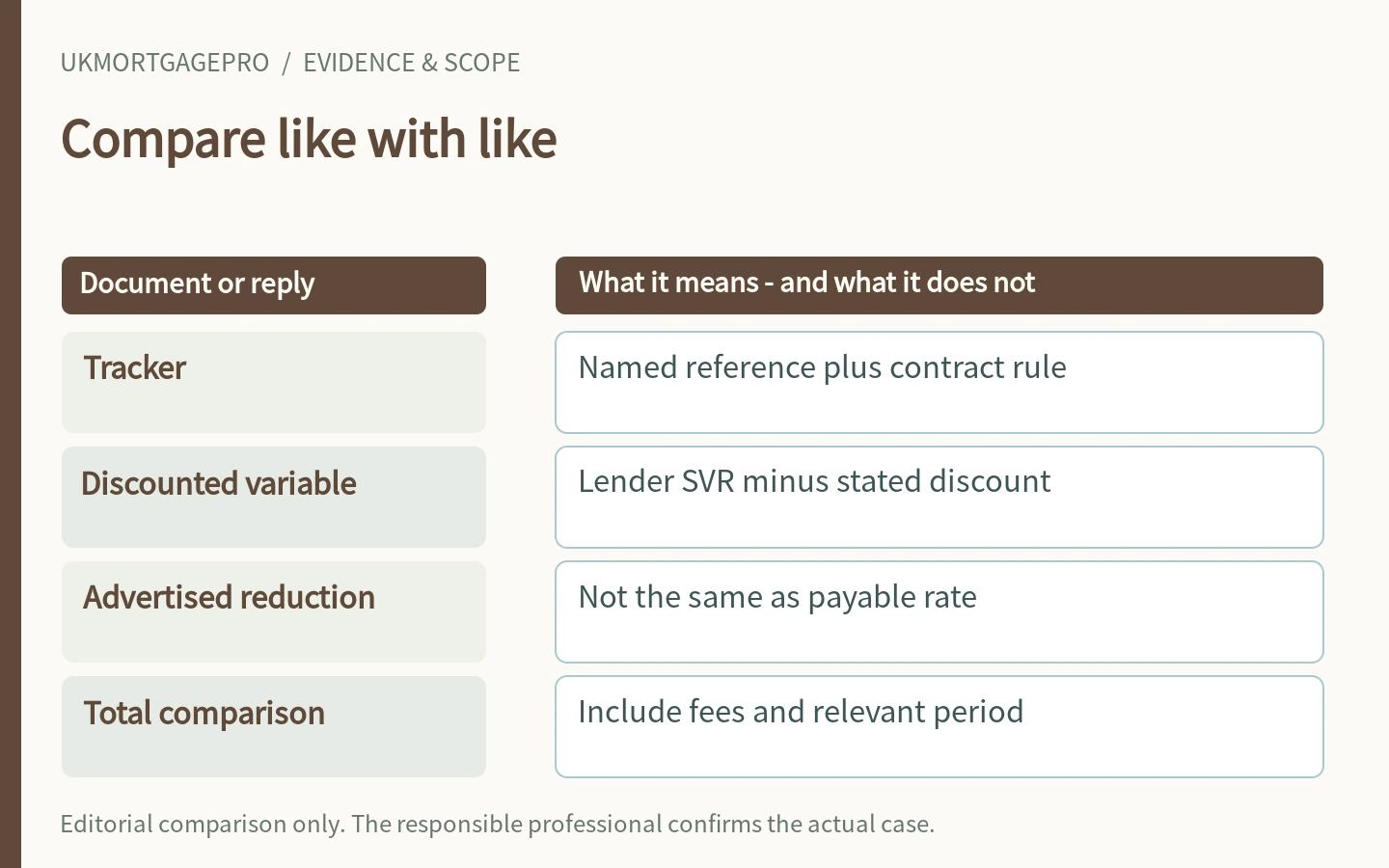
A tracker and a discounted-variable mortgage are both variable-rate arrangements, but their reference points need not be the same. MoneyHelper explains that a tracker follows another rate, commonly the Bank of England base rate, while a discounted mortgage applies a reduction to the lender’s standard variable rate, or SVR. Before comparing two offers, write down the named reference, the contractual margin or discount and the period for which that arrangement applies. A product label alone does not provide those answers or determine suitability for a borrower.
A larger discount can start from a different number
Two lenders can operate different SVRs. A larger reduction from one lender’s SVR therefore does not automatically produce a lower payable rate than a smaller reduction from another lender’s SVR. This is an arithmetic relationship, not evidence that a particular lender is cheaper today. Use the dated illustration or offer for each product and compare the actual payable rate on the same date. Do not compare the percentage printed in an advertisement’s discount headline with a competitor’s final mortgage rate; those figures describe different things.
For a tracker, read the reference and the exceptions together
Ask which reference rate is named, how the mortgage rate is calculated from it and when changes feed into payments. Also read any minimum rate, variation provision or other contractual limit that appears in the actual documents. MoneyHelper warns borrowers to examine the small print rather than assume every tracker has identical terms. This article does not assert that every tracker has a floor or that every change occurs on the same day. If a clause is unclear, obtain an explanation of that clause before treating a projected payment path as dependable.
For a discounted product, understand whose SVR can change
A discounted-variable mortgage remains variable during the discount period because the underlying lender SVR can change. It should not be described as a fixed payment merely because the size of the discount is fixed. Nor should it be assumed to move one-for-one with Bank Rate: the lender’s SVR and the external benchmark are different concepts. Check the lender’s contractual terms and the current product documents. A forecast about a central-bank decision is not a substitute for understanding how the product you are considering is allowed to change.
Compare what happens after the initial arrangement
Record the date the tracker or discount period ends, where the rate moves afterwards and whether any part of the loan follows a different schedule. A product may be described with a short introductory period even though the mortgage itself runs much longer. Do not assume that a new offer will be available automatically at the end, or that moving to another lender is merely an administrative change. For remortgage planning, identify the future decision point without presenting an unapproved replacement product as already arranged.
Fees and flexibility are separate from the benchmark
MoneyHelper recommends considering charges as well as rates. Ask about product fees, how a fee added to the mortgage affects the amount borrowed, early-repayment charges, permitted overpayments and exit arrangements. Do not adopt a blanket rule that all trackers have no early-repayment charge or that every discounted product has one. The actual documents govern. A lower initial payment can coexist with different fees, restrictions or a different remaining balance, so compare a relevant period and retain the assumptions used rather than declaring a winner from one monthly figure.
Use scenarios to test affordability, not to predict policy
A useful conversation considers what would happen if the relevant rate rose, fell or stayed unchanged, using the actual contractual mechanism and realistic household finances. It is not necessary to claim that one of those outcomes will occur. Keep uncertain future rates explicitly uncertain and distinguish an illustration from a lender’s affordability assessment. If the payment increase in a plausible scenario would be difficult to manage, raise that issue before committing. This guide is not a personal recommendation to take interest-rate risk and contains no current rate quotation or guaranteed saving.
What to prepare for a focused remortgage enquiry
For an initial UKMortgagePro consultation, describe your current deal’s end date, the intended borrowing purpose and which comparison is unclear: the reference rate, total costs, overpayment rules or the end-of-deal position. You can use a list of document titles and dated figures without publishing full statements, account numbers or identity documents in public comments. Any availability or suitability question needs the individual application and the actual products to be considered. This educational guide was source-checked on 11 October 2026; it does not replace regulated advice, a lender’s offer or your own review of contractual terms.
Practical checklist
- Name the reference rate or lender SVR for each product.
- Separate the margin or discount from the actual payable rate.
- Check variation clauses, timing and any stated minimum rate.
- Record the initial period’s end date and the following rate basis.
- Compare fees, early-repayment terms and realistic affordability scenarios.
Questions to clarify
Does the biggest advertised discount mean the cheapest mortgage?
No. Discounts can be taken from different lender SVRs, and fees and other terms also affect the comparison.
Will every discounted mortgage change exactly with Bank Rate?
No. Its discount is applied to a lender’s SVR; read the actual product terms rather than treating it as a Bank Rate tracker.
Does a tracker always let me leave without a charge?
Do not assume that. Check the particular illustration and offer for early-repayment and exit terms.
Sources and scope
- MoneyHelper: Understanding mortgages and interest rates — checked 2026-10-11; page publication/update date: UNKNOWN — page publication/update date not displayed in reviewed text
Public information and document-organisation guidance only; not personal mortgage, legal, tax, valuation or investment advice, and not lender approval or endorsement. Confirm current case requirements with the responsible professionals.
Related information and consultation
Remortgaging in the UK · Understanding the mortgage application · News and practical guides · Arrange a consultation. Enquiry acknowledgement is not mortgage approval.