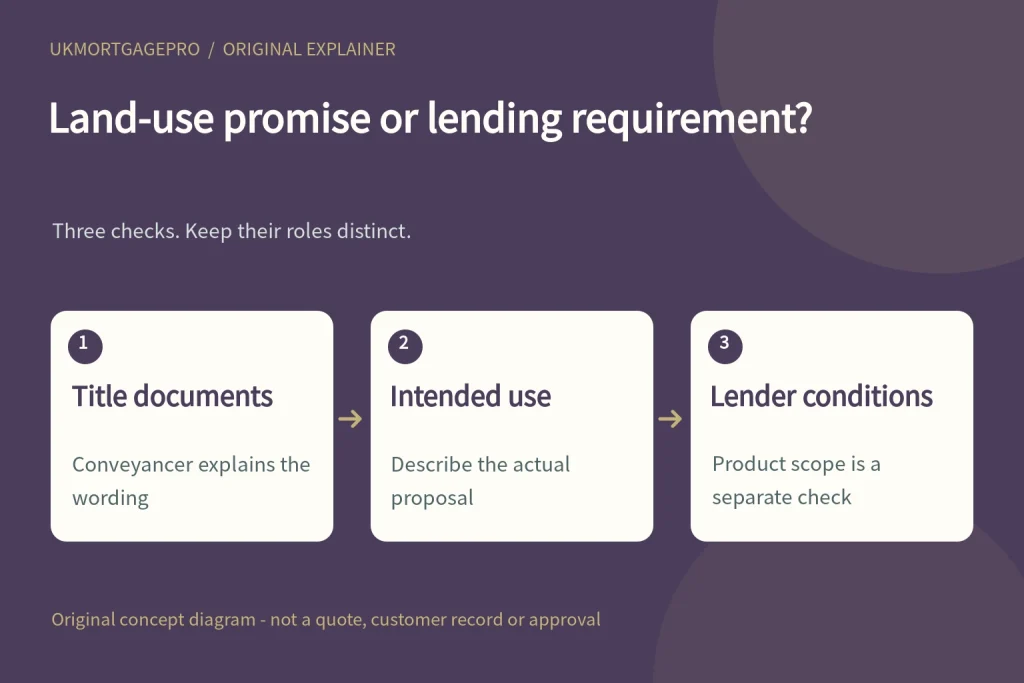
UKMortgagePro original relationship diagram: Title documents / Intended use / Lender conditions. The three checks do not replace one another.
Direct answer: these are different checks
A restrictive covenant recorded in title information and a lender’s mortgage condition are not interchangeable. A lender being willing to consider an application does not, by itself, establish that every proposed use of the land complies with an existing covenant. For a property in England or Wales, ask the conveyancer to interpret the actual wording and any deed the register refers to. This article does not decide enforceability or recommend a legal remedy.
What the public register guide tells you
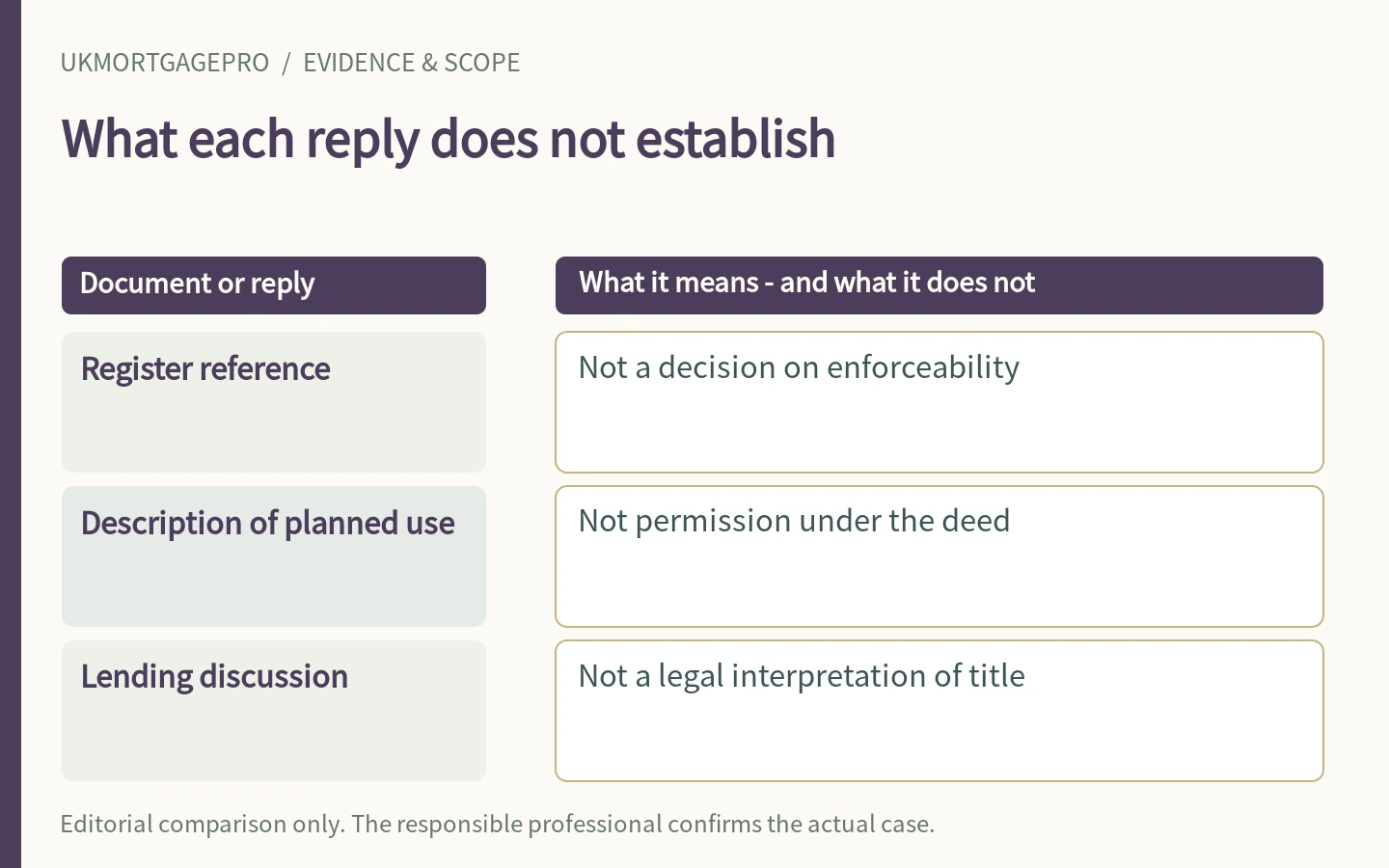
HM Land Registry’s public guide describes restrictive covenants as promises not to do certain things with land. Its property summary can indicate whether covenants exist, while the register provides further information. Sometimes the register refers to another document rather than reproducing all the details. Finding a reference is therefore a starting point for obtaining and explaining the relevant material, not evidence that the full question has been resolved.
Start with the intended use, not a reassuring label
Explain what you intend to do with the property and distinguish the present use from a proposed future change. A broad label such as residential, investment or refinance may leave important details unanswered. Ask which part of that proposal the legal professional has actually reviewed. Do not assume a valuation, a mortgage enquiry or a planning-related document covers the wording of a covenant. The responsible parties may be checking different matters.
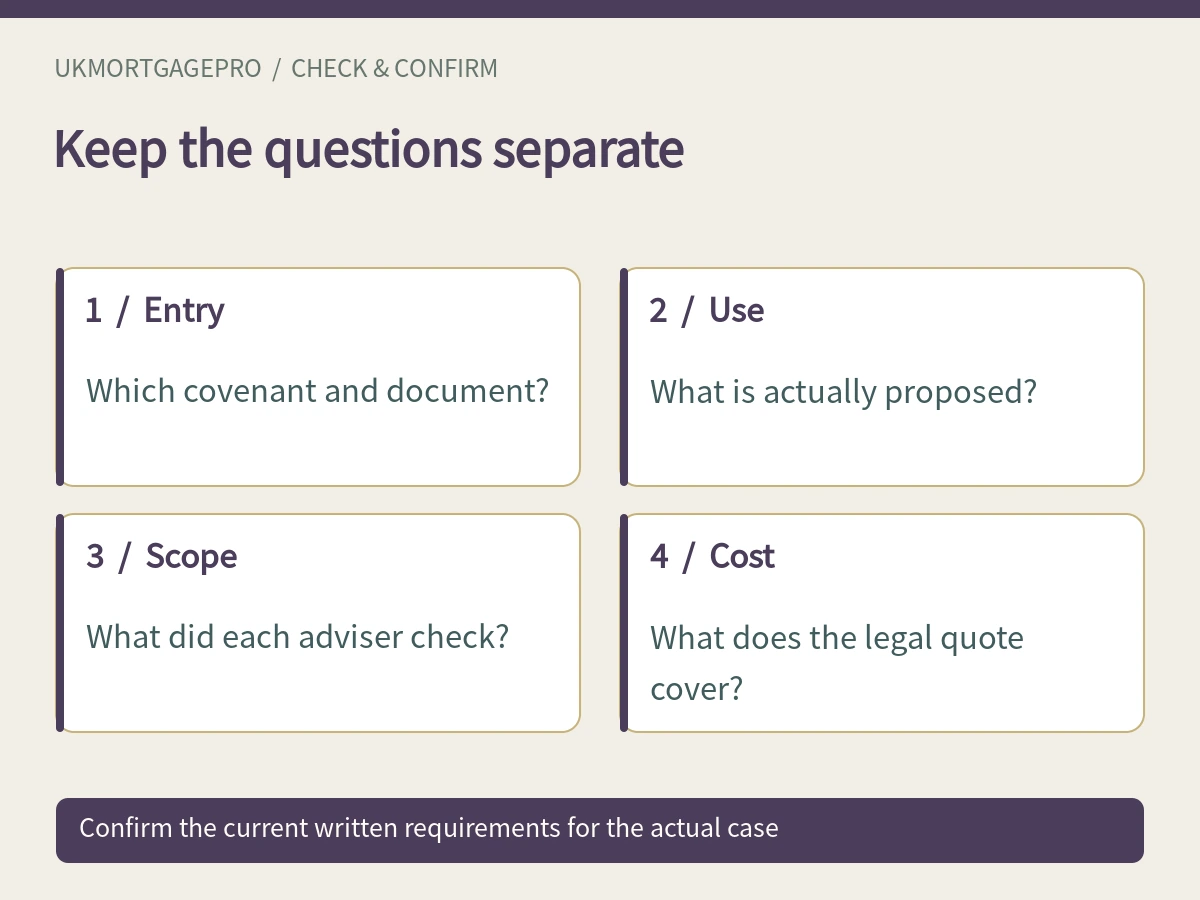
Keep a document-to-question list
Record the current title information, the reference to any deed, the date of each document and the question that remains open. If only a summary is available, say so. If a document is missing or difficult to read, ask the conveyancer what is needed rather than paraphrasing it as confirmed permission. Do not alter a source document or rely on a neighbour’s different title as proof about your own property. Avoid sending sensitive personal records through a public comment field.
Ask separate questions of the conveyancer and the lender
The conveyancer should explain the legal material within the agreed scope of the instruction. The actual lender or authorised channel must separately confirm the product and security requirements for the case. Neither a legal instruction nor an initial lending discussion is mortgage approval. Ask what remains conditional and whether a proposed change needs further review. UKMortgagePro does not remove covenants or guarantee that a lender will disregard them.
Compare scope and costs before committing funds
When considering refinance costs, check whether the legal quote covers reviewing the referenced documents and answering the actual property-use question. Additional work, a separate professional assessment or unresolved evidence can change the scope of an instruction. This guide gives no fixed legal fee, loan rate or completion deadline. Keep unresolved matters visible when comparing options and do not commit refinance proceeds until the actual release conditions are understood.
A useful enquiry is specific without deciding the law
A practical first enquiry can name the property’s jurisdiction, the proposed refinance purpose, the document you hold and the precise use you want explained. It can then ask who will obtain a missing deed and whether that review is included in the agreed legal work. This is an organisational suggestion, not a lender application form. If the answer refers only to the current use, do not extend it to a proposed alteration, letting arrangement or business use. Record those as separate unanswered questions until the responsible professional explains the scope.
Practical checklist
- Identify the precise property and jurisdiction.
- Read the register reference with the conveyancer, including the relevant deed.
- Describe the actual current and planned use, not just an investment label.
- Keep title questions separate from the lender’s product conditions and legal quote.
Questions to clarify
Does a covenant mean the mortgage must be refused?
This article cannot establish that. The effect of the actual legal wording and the lender’s assessment must be checked separately for the case.
Is a covenant the same as a title restriction?
Do not treat those labels as interchangeable. Ask the conveyancer to identify which entries and documents apply.
Can an online summary settle the legal question?
No. A summary may flag an issue without supplying the complete wording or professional interpretation needed.
Sources and scope
- HM Land Registry / GOV.UK: Search for land and property information — checked 2026-10-11; page publication/update date: not stated or not established
Public information and document-organisation guidance only; not personal mortgage, legal, tax, valuation or investment advice, and not lender approval or endorsement. Confirm current case requirements with the responsible professionals.
Related information and consultation
UK remortgage and refinance information · UK mortgage preparation · News and practical guides · Arrange a consultation. Enquiry acknowledgement is not mortgage approval.