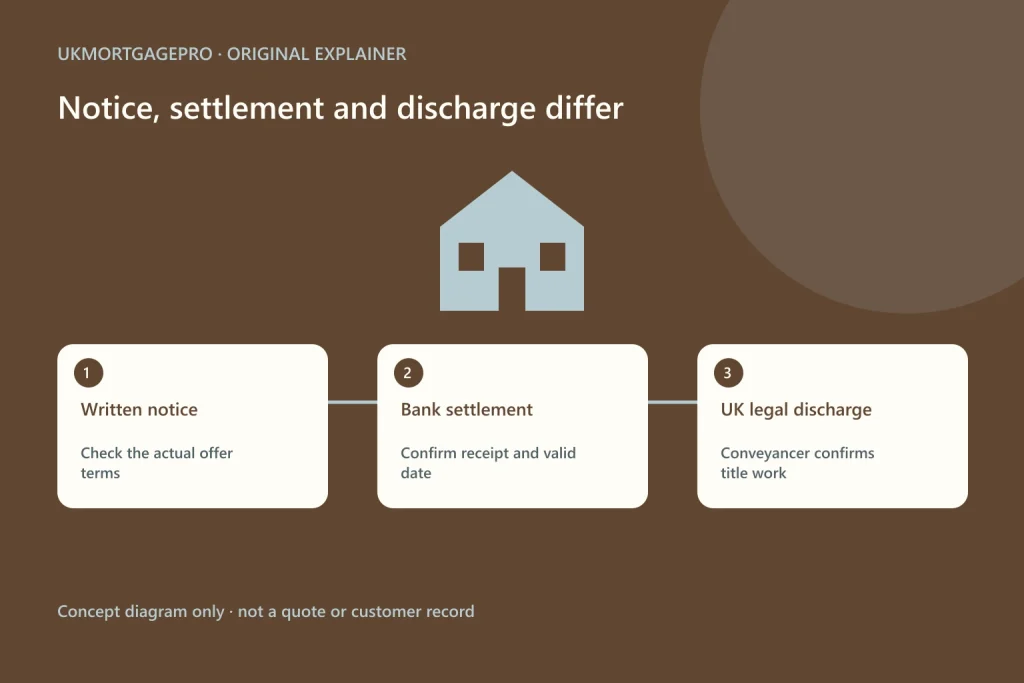
This is an existing-loan question
A Singapore bank UK mortgage can involve an overseas loan contract and UK property legal work at the same time. If an existing UOB overseas property loan is to be repaid after a sale or from the owner’s funds, the bank’s notice process must be distinguished from the UK completion date. This article is about that coordination. It is not a new-loan advertisement, a recommendation to refinance, or a general statement that every Singapore bank uses identical notice rules.
Read the overseas part of the bank’s page
UOB’s public loan-management page describes full redemption steps and distinguishes notice for Singapore property from notice for overseas property. In the section reviewed, it states three months’ written notice for overseas property, alongside checking the Letter of Offer, submitting the full-settlement form and appointing a lawyer for discharge. Treat this as a first-party servicing example. The actual Letter of Offer, amendments and bank instructions must establish what applies to the particular UK-secured facility.
A notice is not a confirmed payoff figure
A message saying that you intend to repay is not the same document as the bank’s settlement calculation or confirmation that the instruction has been accepted. Record the intended date, the date sent and the bank’s response separately. Ask the bank how the notice period is measured and which form or authorised recipient is required. Do not infer that an informal conversation starts the notice period, or that a preliminary balance is the exact amount needed at completion.
Keep the UK legal timetable separate
For a sale, the UK conveyancer has to coordinate the contract, proceeds, repayment and the legal work needed to release the mortgage. For repayment from personal funds, discharge still requires the appropriate legal process. UOB’s page states that legal discharge work is at the customer’s cost, but it is not a quotation for a UK case. Ask the appointed professional to confirm the required work, the expected costs and the timing rather than putting a generic number into the budget.
Check charges in the actual contract
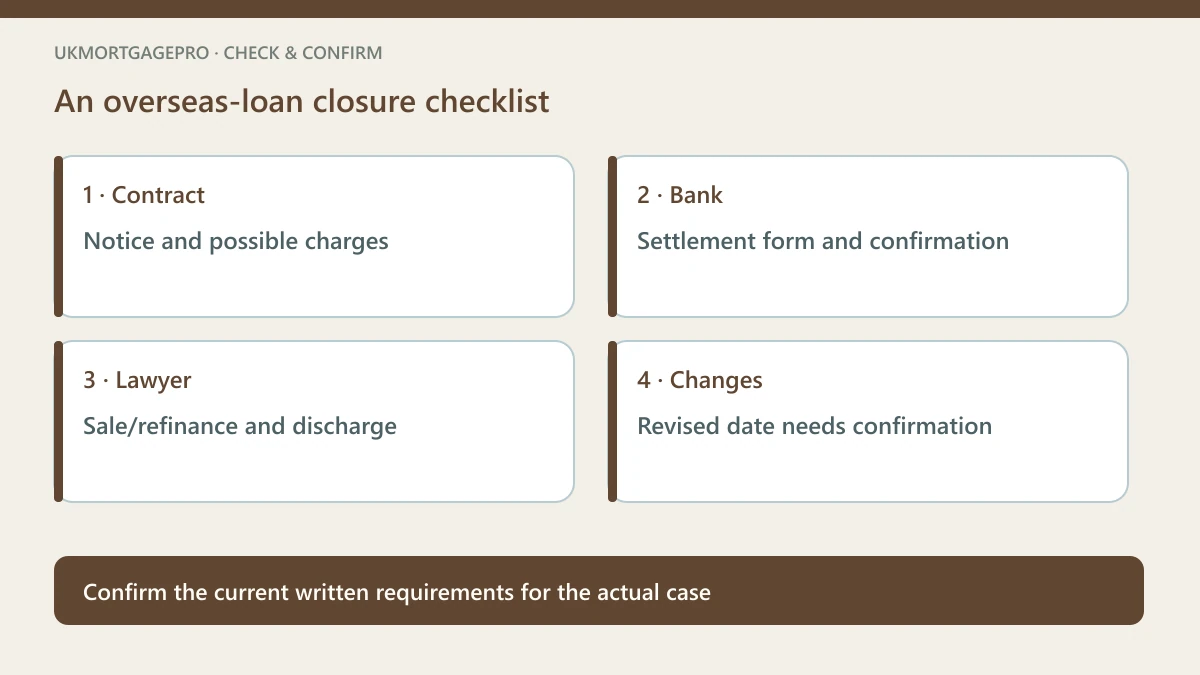
A full settlement can be affected by contractual notice conditions, a prepayment period or other documented charges. Do not assume that giving notice eliminates every early-repayment cost. Equally, do not assume that a UK lender’s usual exit-fee description applies to this overseas facility. Keep charges that have been confirmed separate from possible or disputed items, and ask for a written calculation linked to the planned settlement date. This article does not compute or endorse a payoff amount.
A changed date needs a fresh question
Property completion dates can move. If the date changes after the instruction is sent, tell both the bank and the conveyancer and obtain updated instructions. Do not assume a notice remains valid indefinitely or automatically covers any later date. The servicing page is not evidence that the bank has accepted a change in an individual case. Retain the original correspondence and the revised confirmation so that the legal and payment teams work from the same current plan.
Do not stop normal repayments prematurely
A planned redemption does not itself mean the ongoing account has been closed or every amount has been paid. Continue to follow the bank’s existing repayment instructions while the settlement is being arranged; a planned sale is not confirmation that repayment obligations have ended. If the final account differs from the expected amount, request an explanation from the bank; do not use a website checklist as permission to withhold a contractual payment.
Plan cross-border funds without assumptions
Where funds or the loan balance involve different currencies, ask the responsible professionals how the required settlement amount, payment route and receipt deadline will be confirmed. Keep currency conversion costs separate from legal fees and loan charges. An anticipated exchange rate is not a guaranteed settlement rate. Do not propose a shortcut around bank verification or local payment rules, and do not treat proceeds from an unfinished sale as cleared funds available to repay the loan.
Prepare a limited, useful enquiry
An initial conversation can identify the lender, UK property location, repayment purpose and intended completion month without sharing account identifiers or sensitive documents. The useful outcome is a list of bank and conveyancer confirmations still needed. UKMortgagePro does not act as UOB, claim a bank partnership or certify that a redemption notice has been accepted. The source was reviewed on 3 October 2026, and the actual case requirements should be rechecked before any irrevocable commitment.
Practical checklist
- Separate the written notice from the accepted settlement date.
- Use the actual offer and amendments for charge conditions.
- Confirm UK legal discharge work and costs with the conveyancer.
- Obtain updated instructions if the planned date changes.
Questions to clarify
Does three months on the website settle my contract question?
No. It identifies a public overseas-loan servicing step; the bank must confirm how the actual offer and any amendments apply.
Is UK completion the same as legal discharge?
They are related but separate events. The conveyancer should explain the completion funds and the subsequent or associated title work.
Sources and scope
- UOB Singapore — Managing your Property Loan — checked 2026-10-03; page publication/update date not stated or not established
Public information and document-organisation guidance only; not personal mortgage, legal, tax, valuation or investment advice, and not lender approval or endorsement. Confirm current case requirements with the responsible professionals.
Related information and consultation
Singapore-bank UK-property finance · Remortgage questions · News and practical guides · Arrange a consultation。Enquiry acknowledgement is not mortgage approval.