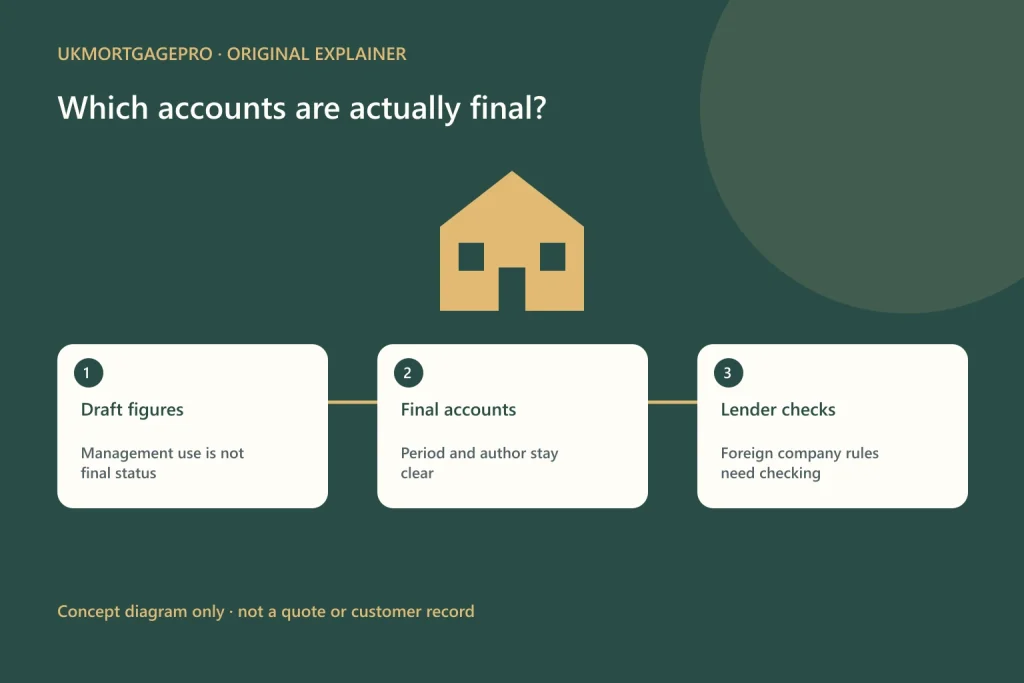
The document status matters
An overseas income UK mortgage enquiry may include management figures, final company accounts and an accountant’s explanation. These are not interchangeable simply because each contains a profit figure. This guide concerns the status and authorship of overseas-company evidence, rather than calculating a director’s income or repeating a general self-employed checklist. Tell the case handler what each document actually is before assuming it meets a lender’s request. A convincing spreadsheet is not itself a final account or a financing decision.
Separate draft from final
Label interim or management records with their genuine status and period. If final accounts have not yet been completed, say so rather than renaming a draft to match the requested document. A later final version can contain adjustments that were absent from monthly management reporting. Keep the relationship between the versions visible, and ask which one is needed for the intended purpose. This is a document-organisation step, not a statement that all lenders require or reject the same reporting format.
A specific first-party example
HSBC UK’s public intermediary packaging page distinguishes its handling of final accounts for overseas limited companies from UK Companies House checks. It states an accountant-signature requirement for international customers supplying overseas-company accounts. This is a particular lender example, not a universal rule or confirmation that an overseas business is eligible. This article does not claim access to the intermediary service, an HSBC partnership or an individual approval. The responsible case handler must confirm the current product and customer scope.
Show the entity and reporting period
A group can contain more than one legal company and accounting year-end. Identify the entity to which each document belongs, along with the start and end of the actual period. Do not use consolidated figures as though they automatically describe the applicant’s own company or personal earnings. An informal English abbreviation should remain linked to the name on the original accounts; it should not silently substitute another business. Raise a genuine name or period discrepancy with the preparer and the receiving professional.
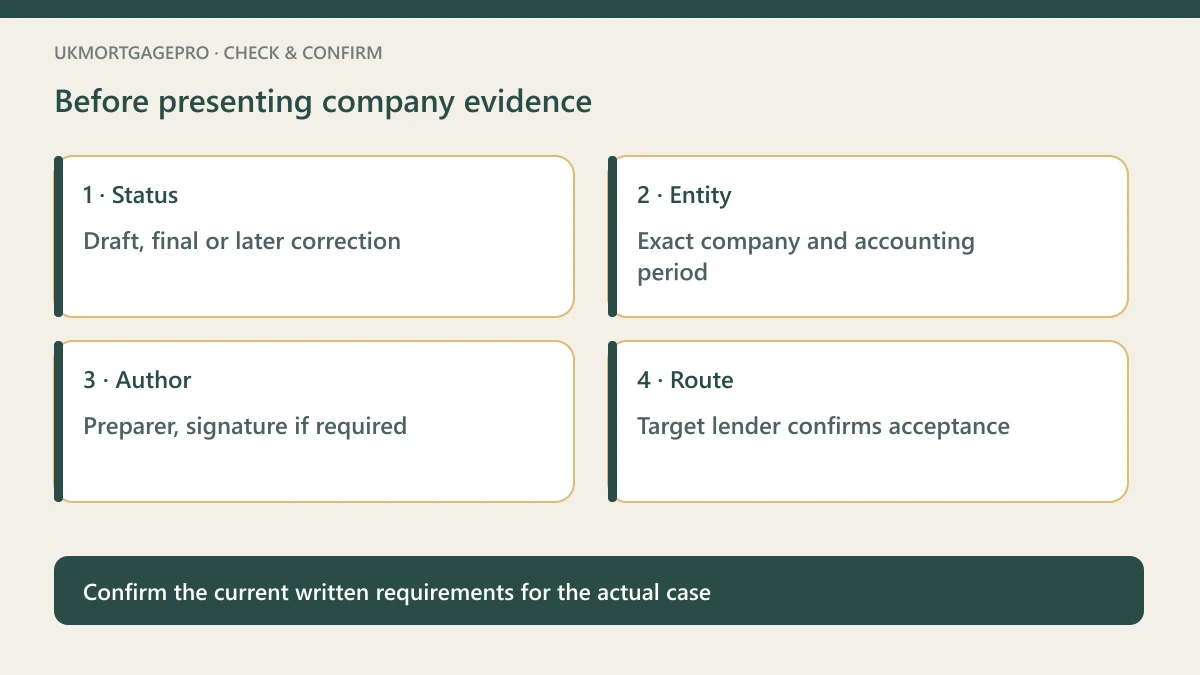
Authorship is not approval
Where a signature or other evidence of preparation is requested, confirm the exact requirement with the receiving lender. Do not add a signature yourself, reuse one from another document or imply that an accountant has endorsed a mortgage application merely by preparing accounts. The accountant can explain the records within their professional role; the bank still makes its own eligibility and affordability decisions. The status of the preparer and any required confirmation should be checked through appropriate legitimate channels, not publicly exposing private records.
Corrections need an explanation
If accounts are corrected after an earlier version was sent, identify the changed version and notify the case handler. Do not present both sets as separate trading periods or select whichever profit happens to look larger. A short record of the correction date, affected period and person who supplied it helps avoid misunderstandings. The mortgage discussion should use the actual evidence requested by the lender. This guide does not decide whether a correction requires a fresh assessment or impose a market-wide processing deadline.
Different documents answer different questions
Company bank transactions can explain movement of money, while final accounts describe a reporting period under the relevant accounting treatment. Neither automatically proves how much income the lender will attribute to a particular borrower. Keep supporting transactions, accounts and personal receipts in separate categories. Where the business has loans or commitments, disclose the relevant facts rather than treating an accountant’s signature as proof that no liabilities exist. Ask the case handler what further explanation is necessary for the actual application.
Avoid paying for the wrong preparation
Before commissioning extra translations, certifications or copies, confirm which entity, years, format and author confirmation the lender actually requires. An initial enquiry can describe the business jurisdiction, final-account status and reporting dates without full company accounts or personal identifiers. Once a legitimate receiving channel is confirmed, provide only the requested evidence. Do not send unredacted files to public comments or general discussion forums. Document convenience is not a reason to alter original financial records.
A useful handover
Create a register with one row per document: entity, period, status, author, version and unresolved requirement. Its purpose is to help the authorised professionals understand what exists, not to certify that it will be accepted. UKMortgagePro provides information and an enquiry route; it does not audit accounts, approve borrowing or claim a banking relationship. Sources were checked on 6 October 2026, and current case requirements need reconfirmation. Business performance, valuation and continuing repayments remain separate financial risks.
Practical checklist
- Draft and final status is explicitly labelled.
- Company and reporting period match the actual document.
- Any required author confirmation comes from the appropriate person.
- Corrections and unresolved lender requirements remain visible.
Questions to clarify
Does a signed account guarantee acceptance?
No. It is evidence with a defined purpose, not a lender decision.
Can management figures simply be called final accounts?
No. Preserve their real status and ask what the receiving lender needs.
Sources and scope
- HSBC UK for Intermediaries — Packaging requirements — checked 2026-10-06; page publication/update date not stated or not established
Public information and document-organisation guidance only; not personal mortgage, legal, tax, valuation or investment advice, and not lender approval or endorsement. Confirm current case requirements with the responsible professionals.
Related information and consultation
Overseas-income applications · Mortgage information · News and practical guides · Arrange a consultation。Enquiry acknowledgement is not mortgage approval.