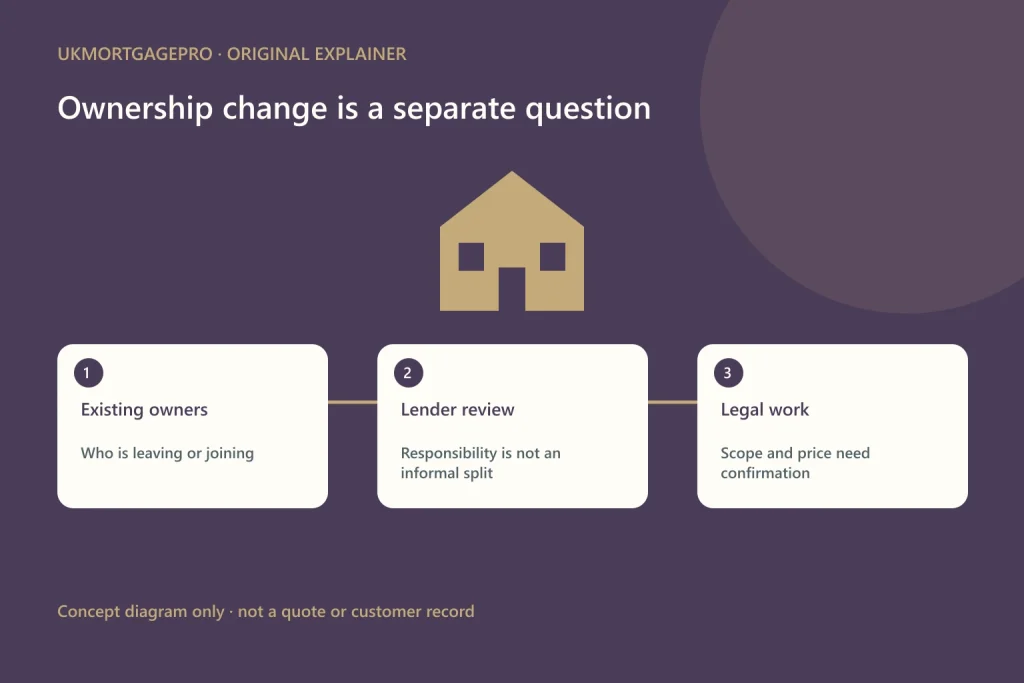
Name the extra transaction
When comparing UK remortgage costs, a wish to add or remove a property owner should be described separately from a change of lender. It is not simply a different name on a payment account. This article concerns ownership-change work alongside a remortgage, rather than a general review of free-legal offers. Explain the proposed transaction to the lender and conveyancer before assuming the same documents, representation or price cover both matters. A private family agreement is not evidence that the lender has released a borrower.
Ownership and borrowing are different records
A person can appear in property-title arrangements and in borrowing documentation for different reasons. Ask the professionals handling the case to explain what must change in each record and when the change will be effective. Do not treat a completed application form as proof that either change has occurred. This guide does not decide anyone’s ownership rights, legal obligations or affordability. Where parties have different interests, the appropriate legal representation and advice must be established for the actual transaction.
A first-party example of extra work
HSBC UK’s public conveyancing page identifies transfer of title among items outside its described standard legal-fees incentive. It also explains that adding or removing a name can involve extra costs and separate legal representation. This is one lender’s published scope, not a quote or a universal arrangement. The article therefore does not publish a standard transfer-of-equity fee, apply HSBC’s scheme to another lender or claim that a particular firm can act for every party.
Ask who the lawyer acts for
A firm instructed for the mortgage may have a defined client and scope. Confirm who represents the lender and who advises each person involved in the ownership change. Do not assume a panel appointment means personal advice to all participants, or that one firm can always undertake every role. The professional should explain any limits or need for separate representation. An online progress message saying that a case has been accepted does not settle those questions.
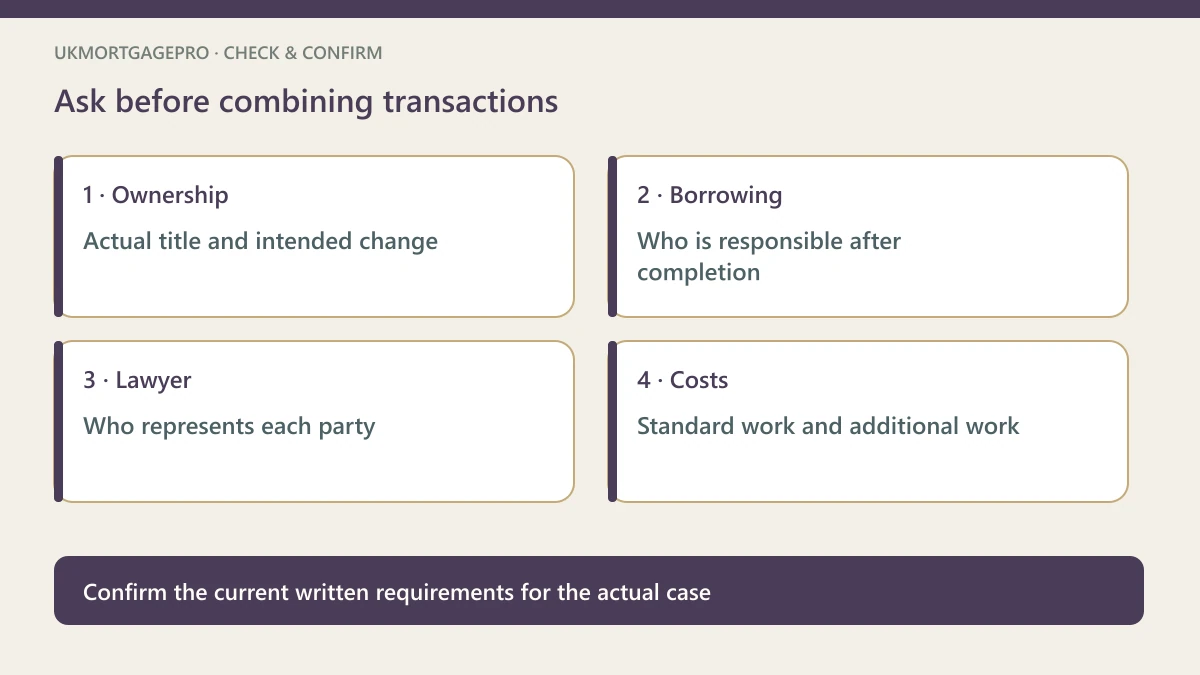
Request a scoped cost breakdown
Ask the conveyancer which work falls within the ordinary switch and which work is additional because ownership changes. Clarify the basis of any quote, exclusions and when payment becomes due. If circumstances change, seek an updated explanation instead of relying on a price for a different transaction. This article does not determine taxes, filing charges or the legal steps for a particular property; those questions belong with qualified professionals and actual current terms, not an assumed all-inclusive promotion.
Lending approval is another decision
The lender must confirm the proposed borrowing arrangement and who will be responsible. Removing a person from an informal budget does not release their contractual liability. Likewise, the intended new owner’s agreement to help pay does not itself make a revised mortgage approved. Provide the relevant facts through the case handler and preserve unresolved conditions. This guide does not offer a strategy to avoid assessment, promise a release of responsibility or recommend changing ownership to secure better borrowing terms.
Keep the money movement visible
A transfer may involve money paid between parties or other arrangements that need explanation. Do not insert an assumed payment into the remortgage budget without confirming its amount, purpose, source and timing with the responsible professionals. The new loan balance and the cash available after settlement are separate figures. If the proposed transaction cannot complete on the original funding assumptions, tell the lender and conveyancer; do not hide the extra purpose within a generic “remortgage costs” entry.
Dates remain conditional until checked
Combining a lender switch with ownership work can introduce unresolved conditions. Ask which documents and approvals are needed before the actual completion date can be confirmed. This article sets no universal deadline or expected processing period. A date selected by the parties should not be represented as a promise from the bank or law firm. Keep any revised offer and legal instructions aligned, and let the person responsible for the transaction explain the consequences of delay or incomplete requirements.
A concise enquiry is sufficient initially
An initial conversation can state whether someone is joining or leaving the title, whether a lender switch is intended and whether a conveyancer is appointed. There is no need to publicly share private family agreements, identity records or full loan documents. UKMortgagePro can help organise questions but does not transfer ownership, release borrowers or provide personal legal or tax advice. Source information was checked on 6 October 2026; individual requirements need reconfirmation before commitment.
Practical checklist
- Owner change is disclosed as separate work.
- Title position and borrowing responsibility are not conflated.
- Representation and additional costs are confirmed.
- Funding assumptions and effective dates remain conditional.
Questions to clarify
Does free remortgage legal work cover an owner change?
Do not assume so. Obtain the actual scope and separate costs.
Can an informal agreement remove mortgage liability?
Do not treat it as a lender release; get appropriate professional confirmation.
Sources and scope
- HSBC UK — Conveyancing for existing customers — checked 2026-10-06; page publication/update date not stated or not established
Public information and document-organisation guidance only; not personal mortgage, legal, tax, valuation or investment advice, and not lender approval or endorsement. Confirm current case requirements with the responsible professionals.
Related information and consultation
Remortgage information · Mortgage information · News and practical guides · Arrange a consultation。Enquiry acknowledgement is not mortgage approval.