Separate the two meanings of term
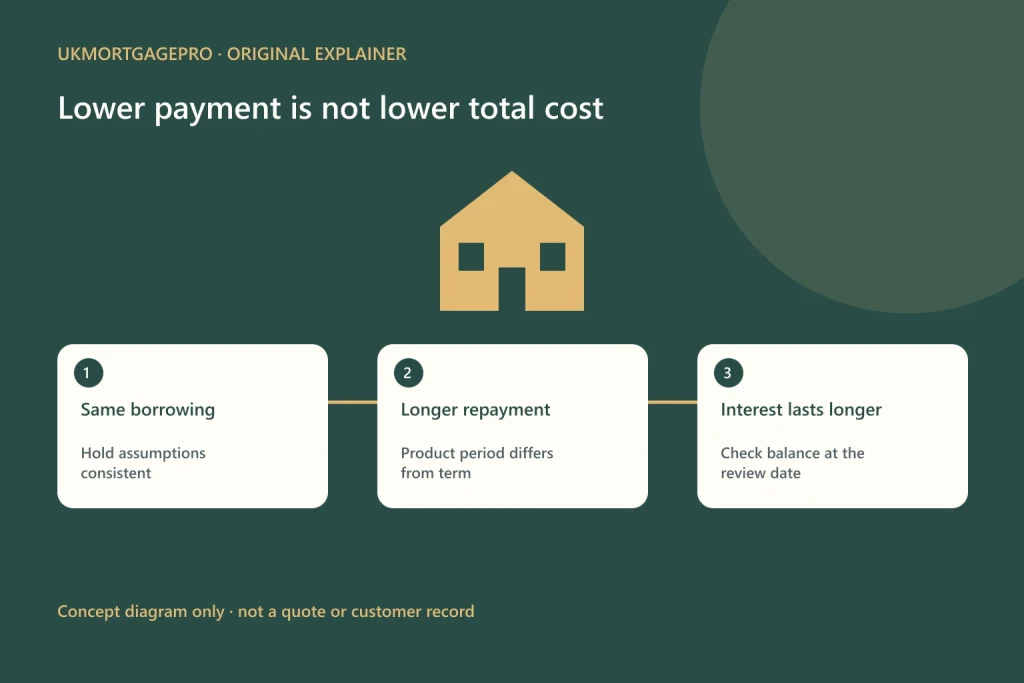
When comparing UK remortgage costs, a fixed-rate product period and the mortgage repayment term answer different questions. A product can fix a rate for a limited period while the borrowing is repaid over many more years. This article examines what happens when a remortgage extends the remaining repayment term. It is not a comparison of live interest rates or a recommendation to extend borrowing. A smaller monthly instalment should be read alongside the balance still owed and the interest paid over time.
The mechanism is straightforward
For the same loan balance, repayment basis and assumed positive interest rate, spreading capital repayment over more years normally reduces the required monthly payment while prolonging interest charges. MoneyHelper’s article, updated on 24 June 2026, explains that trade-off using illustrative mortgage terms. Its example interest rate is an assumption, not a current product quote. This article does not reuse the example as a forecast for a customer or imply that the lender will offer a particular term.
Keep a fair comparison
Compare the same borrowing amount, fee treatment, repayment method and starting date. If one illustration includes a capitalised fee and another does not, the change in payment cannot be attributed to term alone. If one loan is interest-only and another is repayment, the monthly figures also answer different questions. Ask the adviser to explain each change separately. A useful comparison states both what has been held constant and what has changed, instead of allowing a lower payment to conceal extra borrowing.
Look at debt at the product-review point
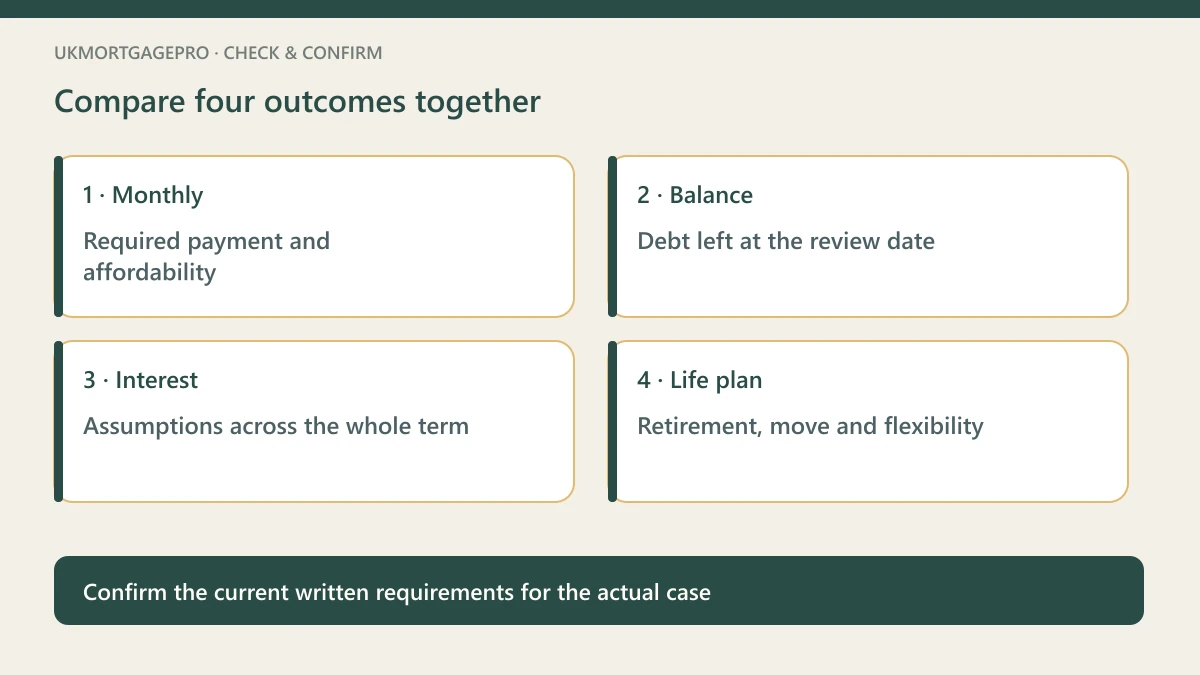
A remortgage may be reviewed when the initial rate period ends, well before the whole loan is repaid. Compare the outstanding balance at that common review date as well as the payments made before it. A longer term can mean less capital has been repaid during the same period. That matters for future choices, but it does not prove that a particular future remortgage will be available. Future property values, rates and lender criteria remain uncertain; do not treat a projected balance as an approved refinancing plan.
Full-term interest needs clear assumptions
A full-term illustration cannot know every future interest rate. If a calculation holds a rate constant or assumes a later rate, state that assumption. Do not add a current fixed rate across decades and describe the result as a guaranteed bill. The mechanism of taking longer to repay is still useful to understand, even when the exact eventual cost is unknown. MoneyHelper’s guidance supports considering the long-run interest consequence; it does not endorse a customer’s modelling assumptions or chosen product.
Monthly affordability is a real concern
Reducing a contractual monthly payment may help a household manage its budget, but the longer-term cost should be understood rather than ignored. Consider known changes in income, retirement timing, ongoing commitments and how long the property may be held. Do not choose the shortest term merely because an illustrative total is lower if the required payment is unaffordable. Conversely, do not describe the longest term as automatically safer. The lender’s affordability and term rules, and personal advice where needed, must be applied to the actual circumstances.
Overpayment is not a promise of savings
MoneyHelper discusses overpayments as one possible way to reduce interest. Whether they can be made, the applicable allowance, early-repayment charges and how the lender uses the payment need to be checked in the actual contract. Do not assume spare cash will always be available or that every bank measures an allowance in the same way. A plan that relies on future overpayment should show what happens if those extra payments are not made, rather than presenting a voluntary intention as a contractual repayment schedule.
Extending the term is not resetting history
Record the current remaining term and the proposed new term, not only the new number. Previously paid interest and repayments are historical facts; the new comparison concerns future choices from the proposed start date. Do not count old payments as a new saving, or assume a refinancing transaction removes the existing balance without repayment. Fees and old-loan settlement charges remain separate costs. Ask the case handler to clarify any further borrowing or repayment-method change that accompanies the term proposal.
Prepare the right enquiry
For an initial discussion, provide the current term remaining, intended remortgage month, repayment method and whether the monthly-payment goal reflects a known budget change. Account numbers and complete statements are not needed in a public form. UKMortgagePro can help organise the questions, but does not recommend a product, set a repayment term or guarantee total-interest savings. Read current lender documents and seek appropriate advice before commitment. Your property may be repossessed if you do not keep up repayments on a mortgage.
Practical checklist
- Product rate period and repayment term are shown separately.
- The loan balance, fee treatment and repayment basis are consistent.
- Monthly payment and balance at a common review date are compared.
- Full-term interest and overpayment intentions are clearly conditional.
Questions to clarify
Does extending the term always save money?
It can reduce a required monthly payment, but that is not the same as reducing total interest or total cost.
Can a plan to overpay eliminate the concern?
Not automatically. Check the contract and affordability of the extra payments, and show the result if they are not made.
Sources and scope
- MoneyHelper — Should you get a 30-year or longer mortgage? — checked 2026-10-03; page publication/update date 2026-06-24
Public information and document-organisation guidance only; not personal mortgage, legal, tax, valuation or investment advice, and not lender approval or endorsement. Confirm current case requirements with the responsible professionals.
Related information and consultation
Remortgage information · Mortgage information · News and practical guides · Arrange a consultation。Enquiry acknowledgement is not mortgage approval.