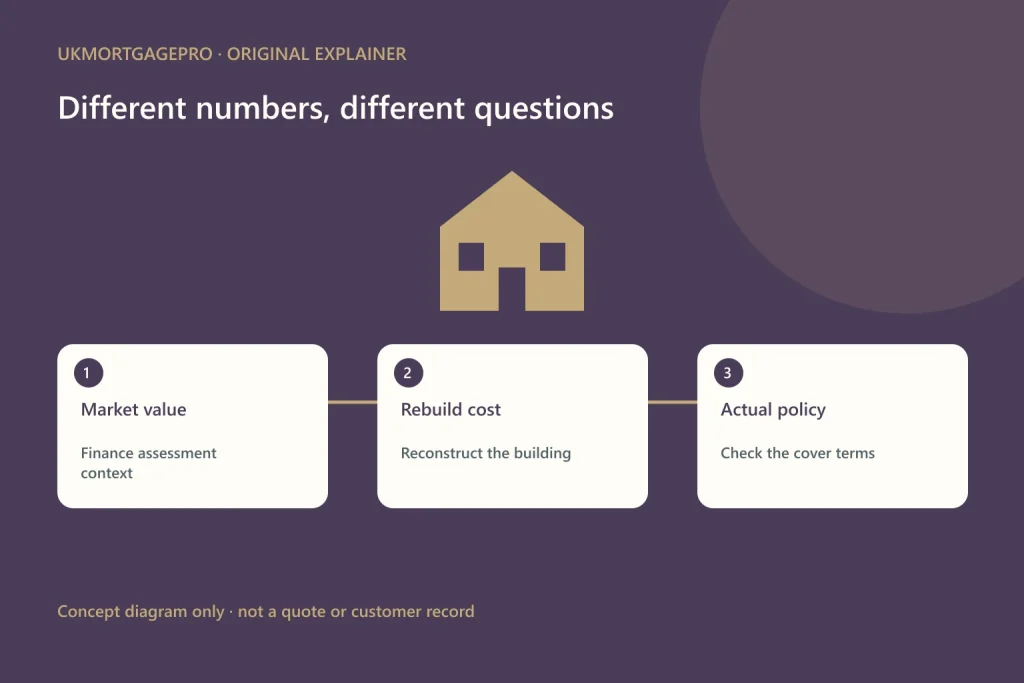
Do not copy a finance figure into every form
A UK property refinance enquiry can involve a property value, an existing debt and a proposed new loan. Buildings insurance asks a different question about the insured structure and the cover provided. This guide separates those purposes rather than comparing premiums or recommending an insurance product. It does not calculate a sum insured, value a property or establish which policy a particular lender accepts.
A clear first-party distinction
HSBC UK public insurance guidance distinguishes the cost of rebuilding a home from its purchase price and current market value. That is the limited factual starting point here. It does not make a mortgage valuation an insurance quotation, nor does it guarantee that every valuation report contains a suitable current rebuild figure. Ask the relevant professional what a particular report actually covers. The source was checked on 7 October 2026; its publication date was not established.
Label the number and its purpose
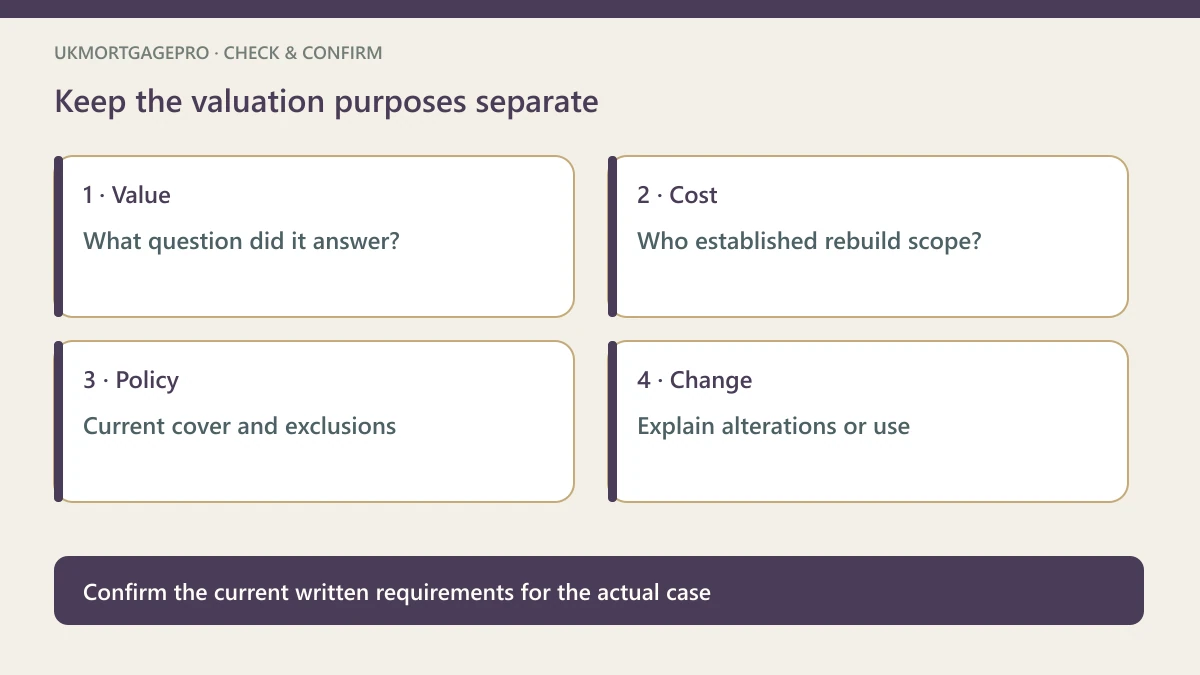
When organising information, label the amount by the question it answered, the person or organisation that provided it and the date. An estate agent estimate, a lender assessment, a survey report and an insurance document should not be treated as interchangeable evidence. Do not present an online asking price as a certified rebuilding assessment. Initial consultation can use a summary; private reports and policy details should go only through an appropriate agreed channel.
Read the insurance document rather than guessing
Ask the insurer or responsible adviser how the actual policy defines buildings cover, the insured amount and any relevant conditions. Some products use different ways of describing cover, so a number from another person’s policy is not a reliable template. This article does not say unlimited cover removes all exclusions or conditions. It does not recommend changing insurance purely to make an application look simpler.
Tell the responsible people about actual changes
An extension, changes to construction or a changed use can raise questions about existing information. Explain the actual facts and ask which professional needs updated evidence. Do not substitute a larger mortgage amount for an assessment of the altered building. The public HSBC guidance flags changes and the possibility of changing rebuild costs; it does not determine the insurance or valuation consequences of the reader’s project.
A flat may involve a shared arrangement
If the property is a flat and insurance is arranged through another party, identify the responsible contact and ask what evidence the lender and conveyancer need. Do not assume that personally receiving no annual invoice means the building is uninsured, or that seeing a management charge proves the required cover is in force. The specific lease, cover and transaction need individual review. This guide does not interpret those documents.
Use the correct professional for each answer
The lender addresses its finance and security requirements, the insurer addresses the policy and cover, and the appropriate property professional addresses the scope of an assessment. One organisation receiving documents does not mean all three questions are resolved. Keep actual written replies separate, including unresolved conditions. UKMortgagePro does not certify reinstatement values, broker a particular insurance policy or promise that a bank will waive its evidence requirements.
An example of a number used for the wrong purpose
Imagine a homeowner receives a new market-value estimate and copies that figure into a note headed rebuild cost without any further explanation. The useful next step is to clarify the source and purpose, not to declare the home correctly insured or change the cover based on this article. This is an invented organisation example, not a customer, approved mortgage or recommended sum. No financial outcome is predicted.
Keep refinancing and cover decisions separate
A proposed refinancing arrangement may change the loan while the insurer still needs accurate property information. Ask about both matters, but do not assume a refinancing completion automatically updates the policy. Conversely, a policy renewal does not approve a refinance application. Maintain a short list of who is checking each issue and what remains unanswered. Whether any action is required must be confirmed for the actual loan and policy.
Prepare a practical enquiry summary
A concise summary identifies the property type, the purpose and date of each existing value, actual known alterations or use, and who arranges the buildings cover. Avoid public disclosure of policy numbers, full reports or personal addresses. Use the related refinancing page to discuss information needs, not to request a guaranteed valuation or insurance decision. Public guidance is only a starting point; obtain current case-specific professional advice.
Practical checklist
- Label market value, borrowing amount and rebuild cost separately.
- Ask what the actual report and policy cover.
- Disclose known alterations and use accurately.
- Keep lender, insurer and property-professional responses separate.
Questions to clarify
Does a refinancing valuation automatically prove enough buildings insurance?
No. Confirm the scope of the valuation and the actual policy requirements with the responsible professionals.
Does this guide tell me an insured amount or recommend a policy?
No. It explains the information distinction, not individual valuation or insurance advice.
Sources and scope
- HSBC UK — How much home insurance do you need? — checked 2026-10-07; page publication/update date not stated or not established
Public information and document-organisation guidance only; not personal mortgage, legal, tax, valuation or investment advice, and not lender approval or endorsement. Confirm current case requirements with the responsible professionals.
Related information and consultation
UK property refinancing · UK mortgage information · News and practical guides · Arrange a consultation。Enquiry acknowledgement is not mortgage approval.